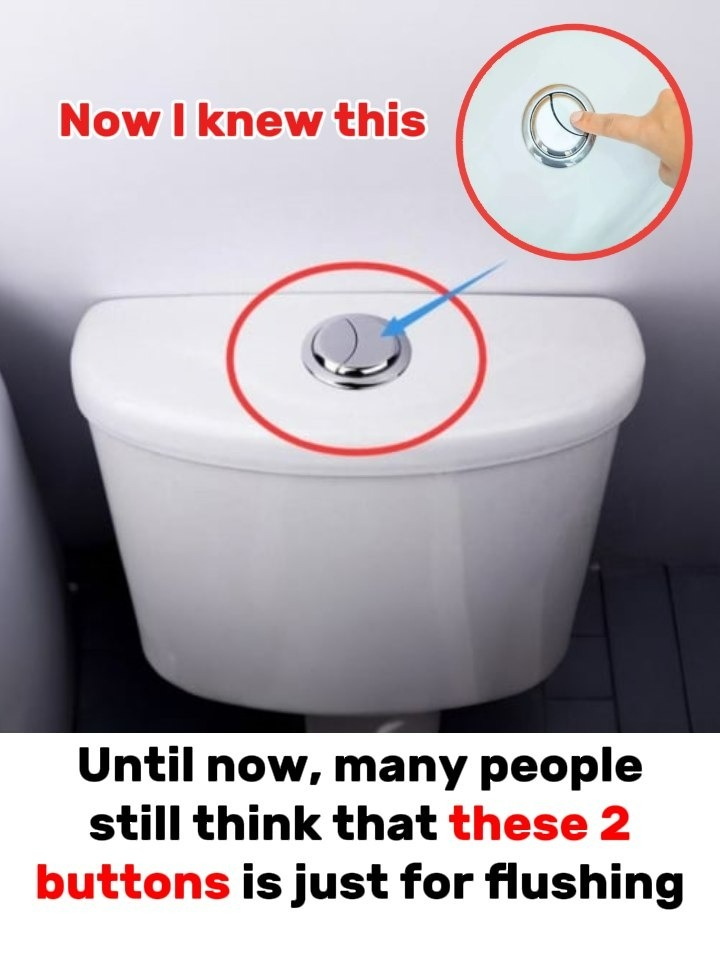
If you’ve ever looked at a modern toilet and noticed two flush buttons instead of one, you’re not alone in wondering what they actually do. Many people assume both buttons simply flush the toilet in the same way, but the truth is that these dual-flush systems were designed to save water, reduce utility bills, and improve household efficiency.
Despite being common in homes, hotels, and public restrooms across the United States, millions of people still use them incorrectly without realizing there’s a difference between the two buttons.
What the Two Flush Buttons Really Mean
Dual-flush toilets are designed with two separate flushing options: one for liquid waste and another for solid waste. Each button releases a different amount of water from the tank.
Typically:
- The smaller button uses less water for liquid waste
- The larger button uses more water for solid waste
This simple design helps conserve significant amounts of water over time. Traditional toilets often use the same amount of water for every flush, regardless of what’s being flushed away. Dual-flush systems solve that problem by giving users more control.
In many households, this can reduce water consumption by thousands of gallons per year.
Why Water Efficiency Matters
Water-saving appliances have become increasingly important as utility costs continue to rise across the country. According to environmental experts, toilets account for a major percentage of indoor household water use.
Older toilets can use as much as 3 to 7 gallons per flush, while many modern dual-flush models use far less. The reduced-water option often uses about half the amount of a standard flush.
Over time, these savings may lower monthly water bills and reduce unnecessary water waste. For environmentally conscious homeowners, switching to water-efficient bathroom fixtures has become a practical and cost-effective upgrade.